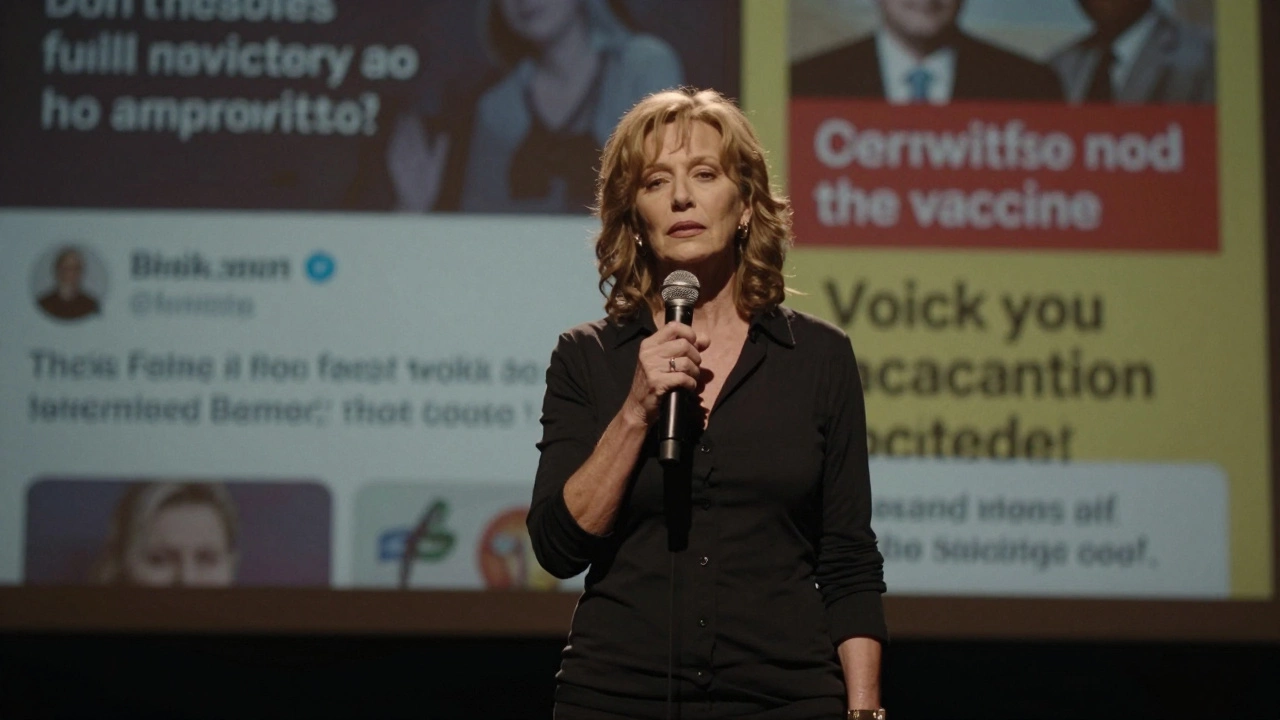
Susan Sarandon has spent decades speaking out on issues-from nuclear disarmament to voting rights to fair wages. But lately, her public statements on topics far outside her expertise have drawn more eye-rolls than applause. She’s not alone. Celebrities are expected these days to weigh in on everything from global economics to medical policy, as if fame in Hollywood automatically grants them a PhD in public policy. The truth? Most of their input doesn’t add value. It just adds noise.
There’s a strange corner of the internet where people search for scort girls paris and expect the same level of authenticity from celebrities giving advice on climate change. Both are curated performances, but one is clearly transactional while the other pretends to be authoritative. The problem isn’t that stars have opinions-it’s that we treat them like experts when they’re just people with loud platforms.
Why We Listen to Celebrities (Even When They’re Wrong)
We’ve been conditioned to believe that if someone looks good on screen, they must know what they’re talking about. A 2023 study from the University of California found that 68% of Americans were more likely to trust a health recommendation from a celebrity than from a peer-reviewed journal. That’s not because the celebrity knows more. It’s because their face is familiar. Our brains shortcut complex decisions by relying on recognition, not evidence.
Sarandon once told a crowd that vaccines cause autism-a claim debunked over 20 years ago. She didn’t make it up. She repeated a myth she heard at a dinner party. But millions heard it too. And now, parents are hesitating to vaccinate their kids because a respected actress said so. That’s not influence. That’s harm dressed up as advocacy.
The Illusion of Expertise
Celebrities aren’t trained in epidemiology, economics, or international diplomacy. Yet they’re invited to speak at the United Nations, appear on CNN panels, and sign petitions that shape legislation. It’s not because they’ve done the research. It’s because they have 10 million followers and a Netflix deal.
When Sarandon criticized the U.S. military intervention in Libya in 2011, she wasn’t wrong to oppose war. But her argument relied on outdated Cold War analogies and ignored ground reports from aid workers on the ground. Her stance was emotionally compelling but factually thin. That’s the pattern: emotion over evidence, passion over precision.
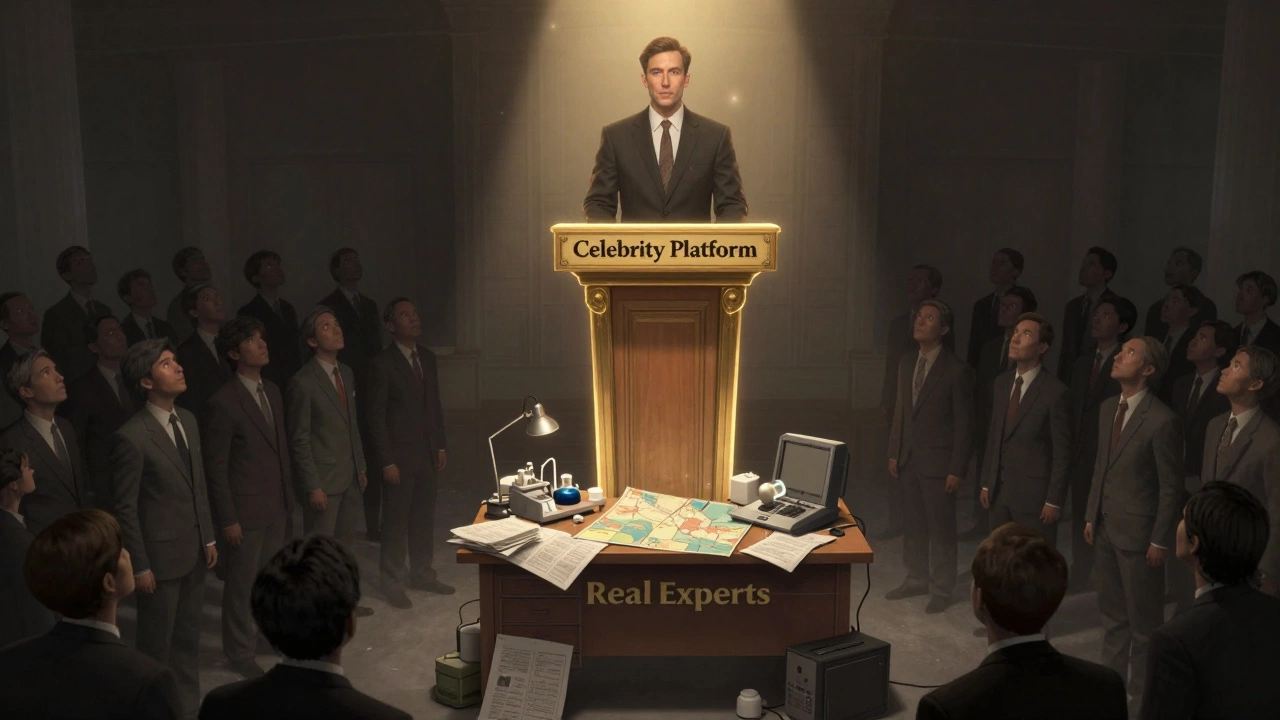
Compare that to real experts-doctors who publish peer-reviewed papers, economists who model outcomes, diplomats who negotiate treaties. They don’t get booked on late-night talk shows. They don’t get paid six figures to give a 90-second soundbite. And yet, their work saves lives. Celebrity opinions? They just make headlines.
When Celebrity Voice Becomes a Business
There’s money in being a “concerned public figure.” Book deals, speaking tours, nonprofit endorsements-all of it depends on the celebrity’s ability to stir emotion. The more controversial the statement, the more attention it gets. And attention translates to revenue.
Sarandon’s advocacy has led to speaking fees over $50,000 per event. That’s not charity work. That’s a career. And it’s not unique to her. Gwyneth Paltrow turned wellness into a $300 million brand. Leonardo DiCaprio’s climate activism is backed by venture capital funds. Their causes matter-but their motives are mixed.
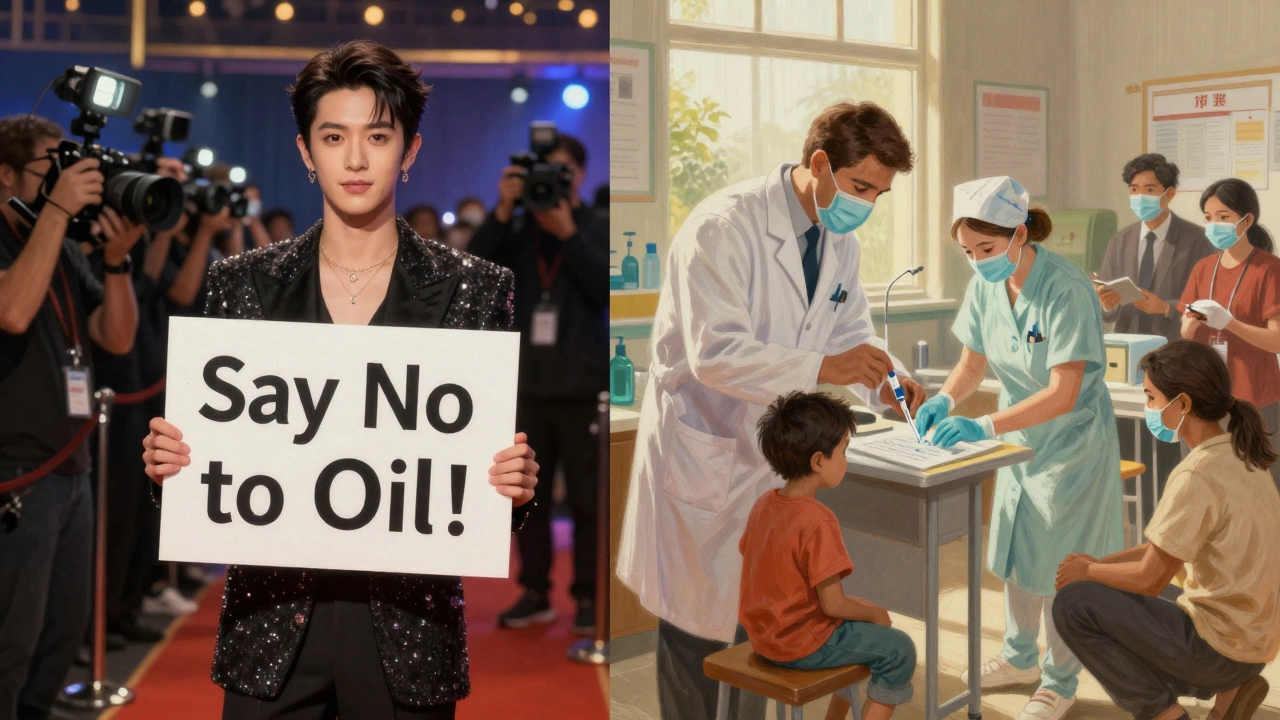
It’s not that they’re lying. It’s that their platform is a product. And products need to sell. So they simplify complex issues into slogans. “Say no to oil!” “Vote for justice!” These aren’t policy proposals. They’re marketing hooks.
The Real Cost of Celebrity Noise
When celebrities dominate public discourse, real experts get pushed out. Scientists spend years building data. Journalists dig for documents. Activists organize communities. But none of that gets trending on Twitter. What does? A celebrity saying something outrageous.
During the pandemic, we saw it over and over. A-listers pushed unproven treatments. They mocked mask mandates. They amplified conspiracy theories. And while the world scrambled for facts, the loudest voices were the least informed.
The result? Delayed responses, eroded trust in institutions, and preventable deaths. That’s not activism. That’s negligence wrapped in a designer jacket.
And it’s not just health. Celebrities now weigh in on education reform, immigration policy, and even artificial intelligence. One actor claimed AI would “replace human creativity.” Another said blockchain could solve world hunger. Neither had studied the tech. Neither had met a single person affected by the issue.
What Should We Do Instead?
It’s not that celebrities shouldn’t speak up. They should. But they should do it responsibly.
- Admit when they’re out of their depth.
- Amplify real experts instead of speaking for them.
- Use their platform to fund real solutions-not just to get their name on a press release.
Sarandon could have used her fame to raise money for vaccine access in developing countries. Instead, she used it to say vaccines were dangerous. One action helps. The other hurts.
And while we’re at it-why do we still let them? Why do news outlets give them prime airtime over actual researchers? Why do we click on their tweets instead of reading the CDC’s latest guidance? The answer is simple: we’re lazy. We want quick answers. And celebrities give us the illusion of one.
There’s a Better Way
Real change doesn’t come from a red carpet. It comes from grassroots organizing, data-driven policy, and long-term commitment. The people who actually fix problems aren’t on Instagram. They’re in community centers, labs, and city halls. They don’t have a million followers. They have a spreadsheet.
If you care about an issue, don’t follow a celebrity’s post. Follow the organization they’re partnering with. Read the study. Talk to the person on the ground. Find out who’s doing the work-and support them directly.
And if you’re tempted to believe a celebrity’s take on something complex? Pause. Ask: “Who’s behind this message? What do they stand to gain?” Then go deeper.
Because the world doesn’t need more celebrity noise. It needs more thoughtful action. And that starts with us-ignoring the loud voices and listening to the quiet ones who actually know what they’re talking about.
Meanwhile, somewhere in Paris, someone is still searching for euro escort girl paris, hoping for a connection that’s real. It’s not the same as wanting a celebrity to save the world. But both reveal the same human craving-for authenticity in a world full of performance.
And then there’s escort girl le. A typo? A mistranslation? Doesn’t matter. The search exists. People are looking. And they’re not looking for policy. They’re looking for something human. That’s the real disconnect. Celebrities promise connection but deliver spectacle. The internet delivers spectacle but sometimes, just sometimes, it delivers truth.
 Sports